Stewards of a National Treasure: 100 Years of the Appalachian Trail Conservancy

Share

items from the MacKaye Family papers at Rauner Library

New Exhibition Commemorates this Historic Moment

This year is the Appalachian Trail Conservancy’s 100th anniversary overseeing the protection and management of the world’s longest hiking-only footpath. To commemorate this incredible milestone, we partnered with the ATC to curate an extra-special Fall Term exhibition that helps tell the Trail’s grand story. “From Vision to Reality: The Appalachian Trail from Then to Now” is a retrospective that pieces together the founding vision, how the trail came to be, and how it connects to Dartmouth and local A.T. communities today. We’re incredibly excited to showcase artifacts from the archives at Dartmouth Libraries’ Rauner Special Collections Library to bring this history to life.
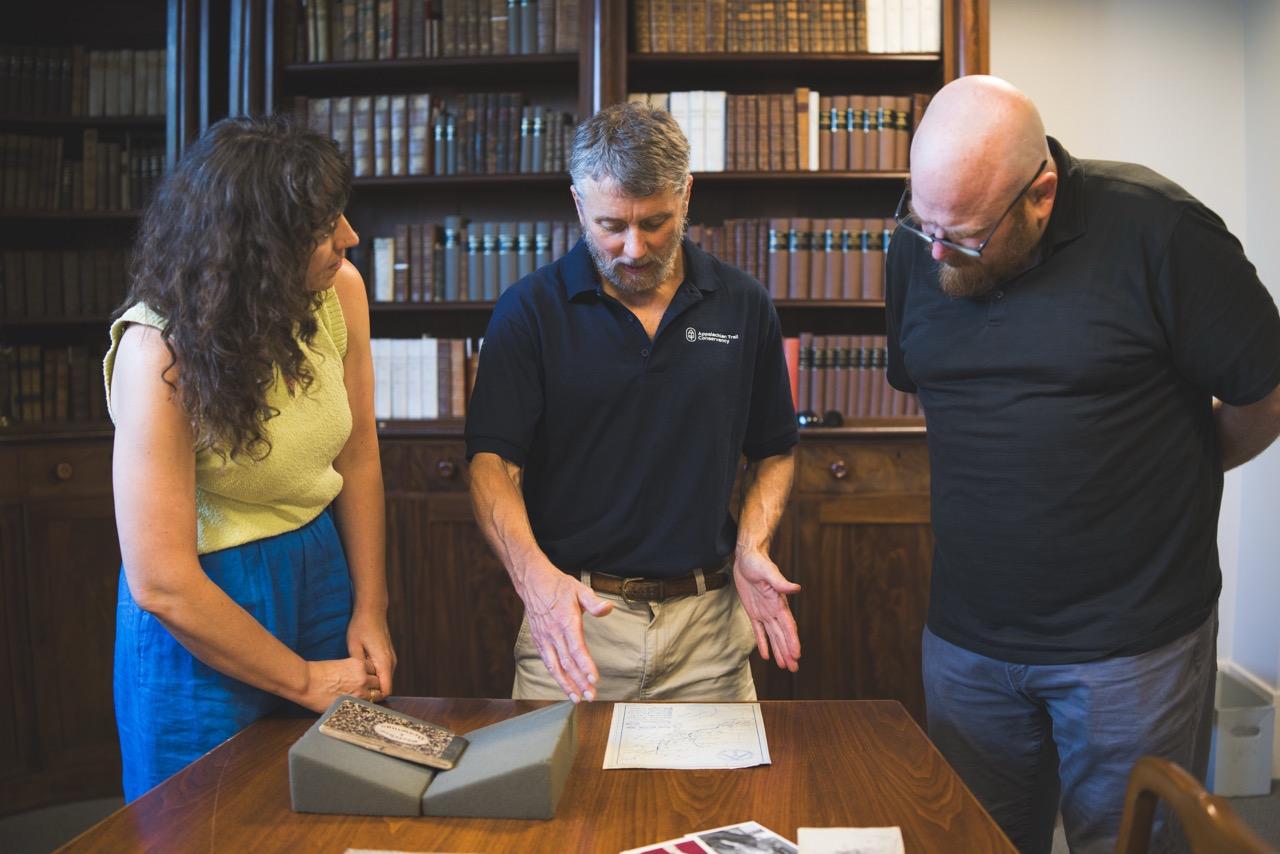
from left Leonee Derr, Hawk Metheny, and Morgan Swan look at items from the MacKaye Family Papers

Vice President of Trail Management at the ATC, Hawk Metheny (middle) discusses items from the MacKaye Family Papers

Hawk Metheny, Vice President of Trail Management, describes how he hopes the ephemera on display will give people a feeling akin to stepping foot on the “hallowed and legendary ground” of the Appalachian Trail and to “experience the aura of this 100-year-old history.” 

While millions of people step foot on the A.T. annually, not as many know its story. We asked Hawk to share his perspective on the exhibition and a bit of the Trail’s history.

the Appalachian Trail map drawn by Benton MacKaye

the Appalachian Trail map drawn by Benton MacKaye

A Footpath through the Woods

Pioneering naturalist and environmental philosopher Benton MacKaye was a visionary. But don’t worry if his name is unfamiliar. You are, of course, familiar with the pinnacle of his life's work: the Appalachian Trail. Benton honed this vision for years before outlining it in his 1921 article, "An Appalachian Trail: A Project in Regional Planning.” That article was a rallying call to action for individual trail groups from Georgia to Maine to partner with the emerging Appalachian Trail Conference (now Conservancy) to make a more connected through-trail. The purpose of the trail was motivated by his desire to preserve land for recreation and conservation while balancing human needs and those of nature. The result of which makes the A.T. so special to this day. 

The oxygen in the mountain air along the Appalachian skyline is a natural resource (and a national resource) that radiates to the heavens its enormous health-giving powers with only a fraction of a percent utilized for human rehabilitation. Here is a resource that could save thousands of lives.

visionary Benton MacKaye, designer of the Appalachian Trail
a collection of photos of Benton MacKaye

images of Benton MacKaye and personal ephemera from the MacKaye Family Papers at Rauner Library

“Benton was a purist,” shared Hawk, “so in the abstract, his vision was a simple concept for people to get behind: a footpath through the woods.” However pure the intentions, the project would be fraught with complexity, not just in building it but in sustaining it.

In a 1925 meeting, to minimize potential governance issues, the collected groups created the ATC to guide the collaborative project and steward the trail from then on. The trail came to life, “linked by landscape and individual efforts, one piece at a time.”


A Trail of Bruised Egos

For the 12 years following that fortuitous 1925 meeting, Benton’s notoriously bold and polarizing partner, Myron Avery, applied his hard-driven, can-do attitude to make the shared vision of a “footpath through the woods” a reality.

Trail architect and future ATC chairman Myron Avery stands on the Appalachian Trail near the original southern terminus on Mt. Oglethorpe, Georgia (photo ATC)

Trail architect and future ATC chairman Myron Avery stands on the Appalachian Trail near the original southern terminus on Mt. Oglethorpe, Georgia (photo ATC)

Although they had differing approaches to designing and laying out the trail, Appalachian Trail aficionados and history buffs will often refer to Benton and Myron together: the visionary and the doer, form and function. With Benton’s pencil sketches, Myron hit the road. “While Myron put a trail on the grounds, he left behind a trail of bruised egos,” shared Hawk, but it was Myron’s dedication and fortitude that drove the laborious process. With handsaws, loppers, and white paint for blazing, Myron and his volunteers and laborers created new trails to connect existing ones, building out the nearly 2,200 miles people walk today. 

One hundred years later, the ATC continues to steward the collective maintenance and sustainability of the trail. Thanks to all those involved in its stewardship, from here in Hanover, New Hampshire to Springer Mountain in Georgia, millions of people from across the globe continue to experience its magic. 

The Appalachian Trail is uniquely tied to both Dartmouth and Hanover. It welcomes hundreds of thru-hikers in the summer, and then in September, Dartmouth students take their first steps into college life on the A.T. as part of First-Year Trips, a tradition that has shaped generations. We're lucky that Dartmouth also holds the papers of Benton MacKaye, the visionary behind the Appalachian Trail, making Dartmouth a true steward of its history.

Clay Adams '93, Tuck '99 | ATC 100th Anniversary Campaign Advisory Committee member and northbound through hiker '97

The Exhibition

On view through December, take a proverbial stroll through history to see for yourself how Benton’s vision came to life and the impact the trail has had on local communities, including the Dartmouth Outing Club, here in the Upper Valley. 

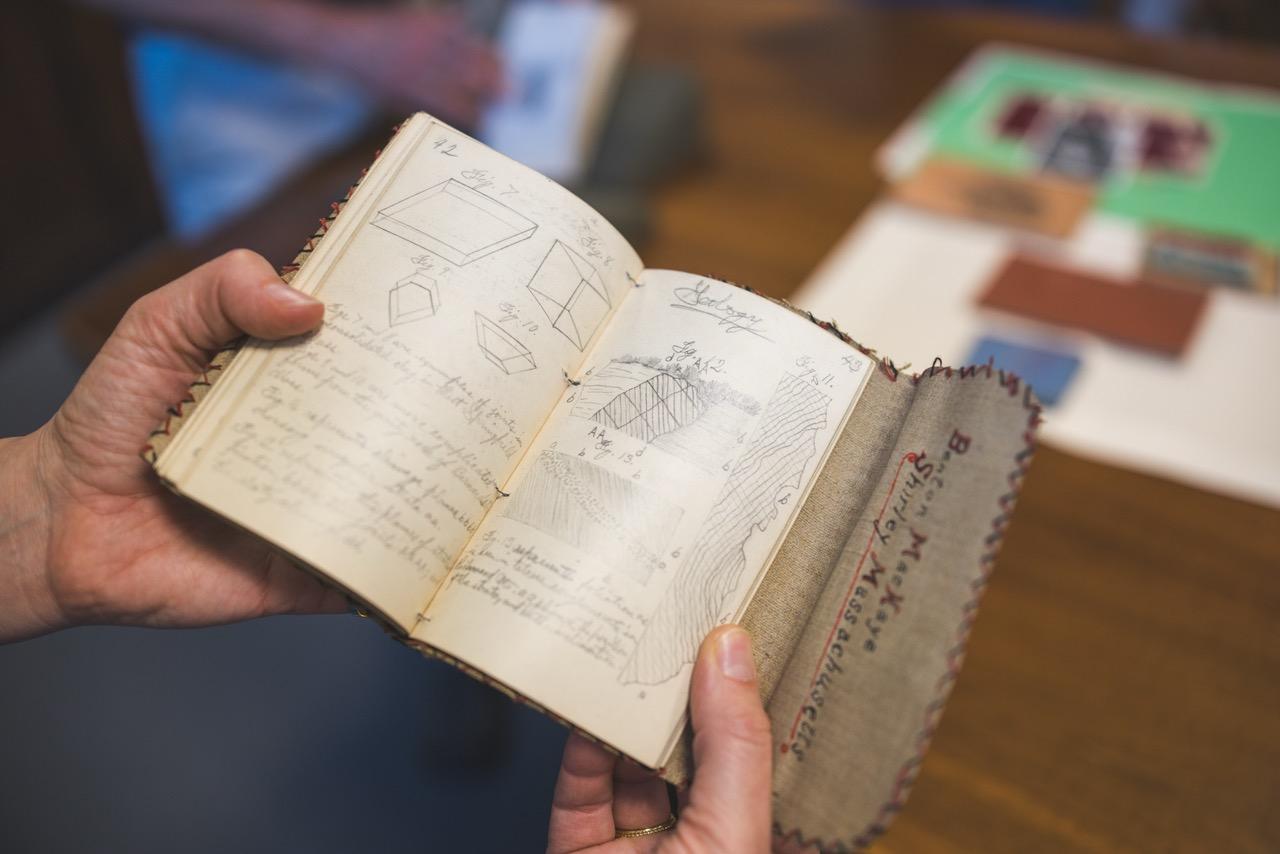
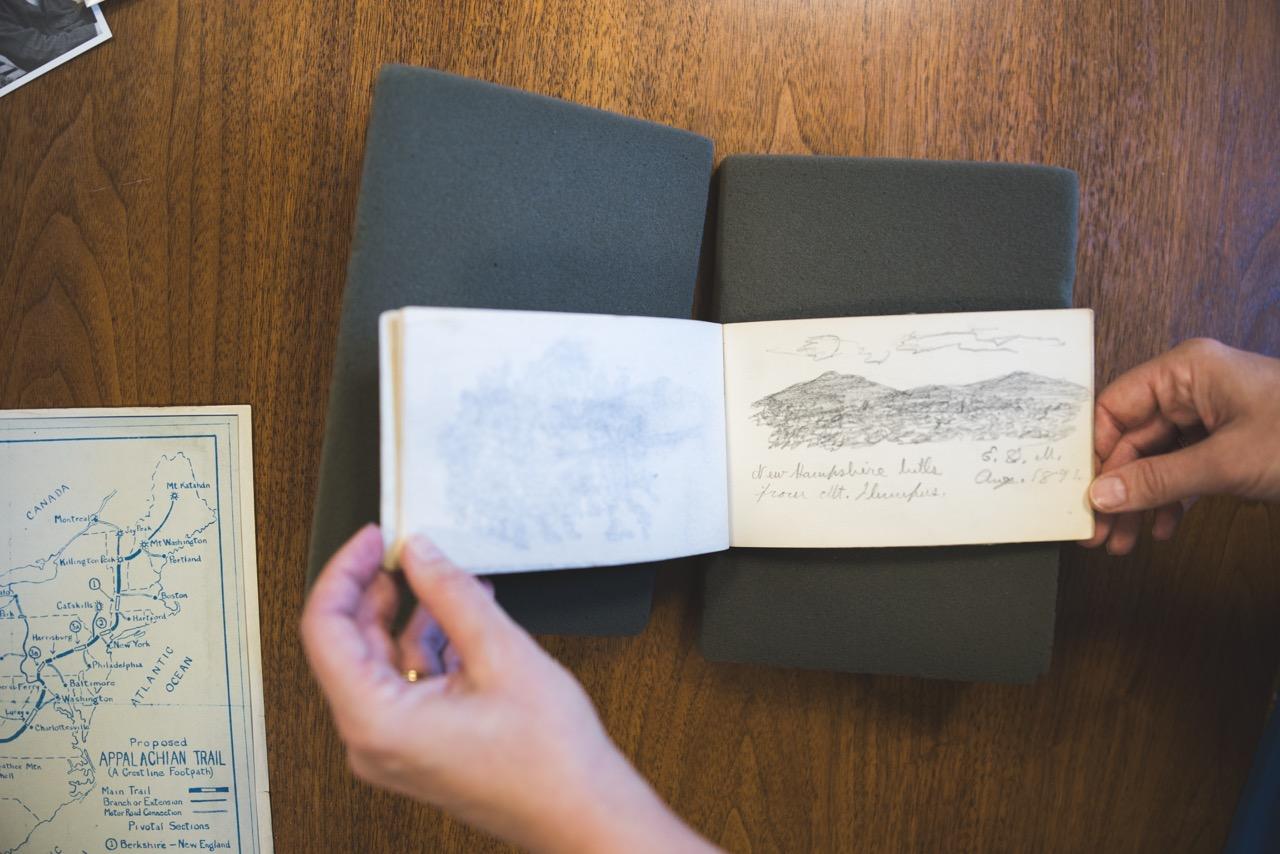
Benton MacKaye's journal

Benton MacKaye's diary

Morgan Swan, one of the exhibition co-curators, shared his view on this momentous collaboration. “One of the strengths of Dartmouth Libraries special collections is the way in which our holdings overlap with and are informed by important historical events, places, and people. The Dartmouth Outing Club’s long-standing partnership with the Appalachian Trail Conservancy is a great example of that intertwining, as is Rauner’s stewardship of the MacKaye Family papers. The opportunity to draw from both archival and manuscript collections to celebrate a national treasure is rare; it made curating this exhibit a delight.”

an excerpt from Benton MacKaye's 1921 article An Appalachian Trail: A Project in Regional Planning

excerpt from Benton MacKaye's 1921 article with a mention of Mount Moosilauke 

“From Vision to Reality: The Appalachian Trail from Then to Now” showcases artifacts from the MacKaye Family Papers, including the original handwritten draft and the final published version of Benton MacKaye's groundbreaking article, “An Appalachian Trail: A Project in Regional Planning.” This retrospective exhibition takes you on a journey from the original idea that created the Appalachian Trail to what keeps it alive today. Don't miss it! 


*all photos credit Dartmouth: Katie Lenhart unless otherwise stated

Back to top